Steve Kirsch believe that all of these people are involved in “The proliferation of false or misleading narratives, which sow discord or undermine public trust in U.S. government institutions” and have collectively led to the tragic death of over 1M Americans.
It's starting to seem like nary a day goes by that the world doesn't isn't confronted with new research raising safety questions about either the mRNA vaccines (mostly Moderna) or the adenovirus-vector jabs like the AstraZeneca and J&J jabs.
On Monday, the bad news focused on the adenovirus jabs, particularly the J&J jab, as researchers from the Mayo Clinic in Rochester, Minnesota, who published their findings in JAMA Internal Medicine, compared data from the general population before the pandemic to data gathered from reported vaccine side effects suffered by Americans.
What they found was disturbing: a person who received the vaccine was 3.5x as likely to develop brain blood clots as an average person before the pandemic.
Blood clots, and specifically cerebral venous sinus thrombosis are well-known side-effects of the J&J vaccine, and the discovery of this risk was the reason usage of the vaccine was paused in April. Still, however, the team insists the side-effect is rare and that the findings must be looked at in the context of the effectiveness of the vaccine in preventing severe cases COVID-19.
The data were gathered from Olmstead, County, Minnesota - a county of around 158,000 people situated around 90 miles southeast of Minneapolis - from 2001 to 2015, per the Daily Mail.
They then used the Centers for Disease Control and Prevention's Vaccine Adverse Event Reporting System (VAERS) to find diagnoses of blood clots in people who received the J&J vaccine between the jab's approval date at the end of February 2021 to May 7.
During the 14 years before the pandemic, there were only 39 Olmstead residents who developed CVST - a rare, potentially deadly, blood clotting condition.
However, after the jabs were being used to treat COVID, that number shot up to 46 reports of CVST confirmed in the VAERS program following patients' who received J&J jabs. Although eight were eventually removed from that pool for either being duplicate reports or not being professionally diagnosed. In total, 38 cases tied to the J&J vaccine were detected, with over 70% being among women.
The discrepancy here is pretty difficult to ignore.
around 8.7MM doses of the J&J vaccine had been administered in the US between February and May.
Adjusted for population, there were 2.46 cases of CVST out of every 100,000 person-years, pre-COVID, pre-vaccine.
However, when also adjusted for population, there were 8.65 cases out of every 100,000 person-years among people who received the vaccine - a rate 3.5 times higher than the general population.
Could it be a coincidence? Perhaps... but it certainly justifies closer examination.
Federal tribunals in the United States are those tribunals established by the federal government of the United States for the purpose of resolving disputes involving or arising under federal laws, including questions about the constitutionality of such laws.
Tribunals are often confused with courts. Tribunals are a part of the administrative system whereas courts, in general, are the creation of the judiciary which is entirely a separate organ. Both the courts and tribunals operate independently of each other. Although their objectives are the same yet there are major differences that establish them as separate bodies.
Tribunals are established under administrative law, which is an offshoot of decentralization of government authorities. Decentralization has resulted in the increased number of departments that have maximized the responsibility of government. Hence, these departments are given the authority to look after their disputes independently without any interference of courts except when the decisions are challenged in their legality.
Just like any court, a tribunal has a permanent establishment. There’s a bench of adjudicators who are responsible to pronounce a just and fair decision in favor of the aggrieved party. As compared to a court, the proceedings of a tribunal are less formal and speedy. The courts are expected to be rigid in their functions because they’re directed to do so as per the rules and code of conduct. Their performance is reported to the higher courts that initiate misconduct proceedings in absence of obedience to proper conduct. In tribunals, the adjudicators are selected from the organization or the department itself. The department makes its own sets of rules and they’re relatively flexible and informal.
The tribunal decisions are binding upon the parties. However, they’re appealable or challengeable in the court, provided the law under which the tribunal is established provides for the opportunity of appeal to the higher courts.
As the Biden administration puts the final touches on an emergency COVID-19 vaccine mandate for companies with 100 or more employees, a crucial piece seems to be missing for the unlucky few who experience serious side effects: meaningful legal recourse.
More than 1,300 COVID vaccine-related injury claims are now pending before an obscure government tribunal, which to date has decided only two such cases, one involving swelling of the tongue and throat following the jab, the other alleging long-lasting, severe shoulder pain.
In both instances, the government, which requires claimants to prove their injuries are “the direct result” of a COVID-19 vaccine, denied compensation.
It’s a steep burden of proof. Lawyers tell me the vaccine is so new that there’s virtually no definitive research on injury causation to cite. THIS IS A BLATANT LIE BY REUTERS.
Indeed, the overwhelming majority of all litigants under what's known as the Countermeasures Injury Compensation Program have not succeeded. According to program data, 29 claims have been paid for injuries stemming from other vaccines since the tribunal’s inception in 2010. (Ten additional claims won approval but no compensation.) The other 455 claims – 92% – were denied or otherwise deemed ineligible for review.
For those who prevailed, the median award was $5,677, according to my calculations, spanning from a low of $31 to a high of $2.3 million, for a person who contracted Guillain-Barre Syndrome after receiving the H1N1 influenza vaccine.
There is no provision for damages based on pain and suffering.
For people like Jessica McFadden, who said she developed life-threatening blood clots after receiving Johnson & Johnson’s COVID-19 vaccine in April, legal options are unclear. She's not optimistic about her odds of recovering her losses, and it's certain she won't be able to recover any pain and suffering damages under the Countermeasures Injury Compensation Program.
McFadden, 44, said she was previously healthy and needed two emergency surgeries to remove massive clots in her lungs, heart and left leg. She spent nine days in the hospital, racking up $489,153 in medical bills, she said. Her insurance will cover most, but not all of the tab, she said, and she estimates she'll pay up to $7,000 out of pocket.
She emailed me a photo of extracted clots, which she said were removed during an agonizing procedure performed while she was conscious. They are thick and ropy, like nightcrawlers on a surgical tray.
McFadden, who said she has returned to work but is still taking blood thinners, has not spoken publicly of her ordeal until now. “I’m not an anti-vaxxer. I understand the need for the vaccine,” she said. “I was just trying to do the right thing.”
To be clear, an experience like McFadden described is extremely rare. The Centers for Disease Control and Prevention in May said that out of 8.7 million people who had gotten the J&J jab, only 28 suffered the complication known as thrombosis with thrombocytopenia syndrome. Per the CDC, there is a "plausible causal association" between the vaccine and the blood clots.
Johnson & Johnson in a statement said, “The safety and well-being of the people who use our products is our number one priority.”
To McFadden, the issue is not that COVID-19 vaccines are bad or that no one should get them. Rather, she said, what’s important is how we care for people “when something catastrophic happens” as a result, especially now that vaccine mandates are becoming so widespread.
For decades, vaccine makers have been shielded from product liability lawsuits thanks to the National Childhood Vaccine Injury Act of 1986. The law was passed after pharmaceutical companies were hit with lawsuits over a brain injury known as pertussis vaccine encephalopathy and threatened to quit making the DPT (diphtheria, pertussis and tetanus) vaccine altogether.
Under the 1986 law, people who claim to have been injured by DPT, hepatitis, influenza and other common shots bring their cases in a special, no-fault tribunal, the Vaccine Injury Compensation Program, known colloquially as “vaccine court.” Payouts (including attorneys’ fees) are funded by a 75-cent tax per vaccine.
The forum is far from perfect, but over the years, it has awarded more than $4 billion to injured claimants.
But that’s not where the COVID-19 vaccine injury cases are being decided.
In March 2020, then-Health and Human Services secretary Alex Azar issued a declaration under the Public Readiness and Emergency Preparedness (PREP) Act of 2005 providing liability immunity for medical countermeasures related to the novel coronavirus. Injury claims would be handled by the Countermeasures Injury Compensation Program, which is run by the Health Resources and Services Administration and is geared toward public health emergencies.
Coverage for claimants is limited: Lost wages up to $50,000 a year and out-of-pocket medical expenses. If the person died,
his or her next-of-kin can seek death benefits up to $370,376.
A spokeswoman for HRSA declined my request for an interview but explained in an email how the process works.
First, the person claiming an injury submits a request for a benefits form and relevant medical records. For COVID-19 vaccine injuries, the claims already include a veritable Merck Manual of maladies, everything from dizziness to deafness to death, according to HRSA data.
The form is “reviewed by CICP medical staff,” who decide whether the requester is eligible for program benefits.
If requesters don’t like the decision, they can ask for reconsideration by “a qualified panel, independent of the program.” The panel makes a recommendation to the associate administrator of the Health Systems Bureau of HRSA, whose decision on the payout is final.
You might notice a few things are missing, like an independent judge, a chance to present one's case in person, damages for pain and suffering and the right to appeal beyond the agency.
Vaccine court has all these features. CICP has none.
But this is where the COVID-19 vaccine cases are relegated, at least for now. Per the steps laid out in the 1986 vaccine law, for the COVID-19 vaccine to move to vaccine court, the CDC must first recommend the shots for routine administration to children. Then Congress must pass a law adding the 75-cent tax on each COVID-19 vaccine given, and the Secretary of Health and Human Services must move the vaccines to the Vaccine Injury Compensation Program.
All of this could take years.
Legislation is pending in Congress that would expedite the process (as well as upping vaccine court damages, extending the statute of limitations from three years to five and adding more special masters), but it has yet to gain traction.
Spokespeople for the bill’s sponsors in the House of Representatives – Texas Democrat Lloyd Doggett, and Republicans Fred Upton of Michigan and Mike Kelly of Pennsylvania – did not respond to requests for comment.
In the meantime, people like McFadden face a strict one-year deadline from the date of vaccination to file a claim with the CICP. But it’s not clear if filing in the CICP would preclude her from later moving her case to vaccine court, should that become an option.
She told me that she's waiting until early next year to decide how to proceed.
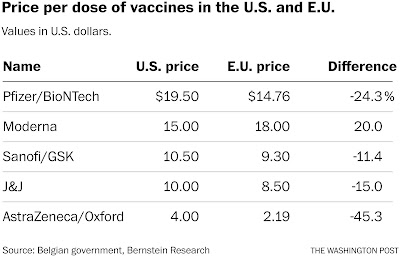
In initial deals with the U.S. government, Pfizer and BioNTech's vaccine costs $19.50 per dose, compared with $15 for Moderna's shot, $16 for Novavax's program, $10 for Johnson & Johnson's vaccine and $4 for AstraZeneca's.
The EU is also paying less for the Pfizer-BioNTech vaccine than the U.S., $14.70 per dose versus $19.50, according to figures reported in BMJ. On the other hand, the U.S. is paying less for the Moderna vaccine (about $15) than the EU (about $18), according to the BMJ piece. The contribution governments have made toward vaccine research is the explanation for the price differences. Moderna is charging the U.S. less for its vaccine because the U.S. government funded research that led to the vaccine’s development. Similarly, the EU supported research that led to the development of the Pfizer-BioNTech vaccine, thus the lower price for that vaccine for the EU.
So far, governments around the world have been the only purchasers of the COVID-19 vaccines, so the price has been set by government contracts. But different countries are paying different prices. South Africa, for example, reportedly paid $5.25 per dose for the Oxford-AstraZeneca vaccine in January, more than twice the price of $2.15 per dose paid by the European Union (EU), according to a report in BMJ. The South African government has announced that it is holding back on administering that vaccine because it may be less effective against the country’s namesake variant.
First to receive emergency use authorization in the United States, the Pfizer shot has become the world’s most popular, with 3.5 billion doses purchased. Sales could double in 2022, according to projections.
But the rapid proliferation of the vaccine, under contracts negotiated between the company and governments, has unfolded behind a veil of strict secrecy, allowing for little public scrutiny of Pfizer’s burgeoning power, even as demand surges amid new negotiations for one of the world’s most sought-after products.
A report released Tuesday by Public Citizen, a consumer rights advocacy group that gained access to a number of leaked, unredacted Pfizer contracts, sheds light on how the company uses that power to “shift risk and maximize profits,” the organization argues.
The Manhattan-based pharmaceutical giant has maintained tight levels of secrecy about negotiations with governments over contracts that can determine the fate of populations. The “contracts consistently place Pfizer’s interests before public health imperatives,” said Zain Rizvi, the researcher who wrote the report.
Public Citizen found common themes across contracts, including not only secrecy but also language to block donations of Pfizer doses. Disputes are settled in secret arbitration courts, with Pfizer able to change the terms of key decisions, including delivery dates, and demand public assets as collateral.
Sharon Castillo, a spokeswoman for Pfizer, said that confidentiality clauses were “standard in commercial contracts” and “intended to help build trust between the parties, as well as protect the confidential commercial information exchanged during negotiations and included in final contracts.”
Both Pfizer and Moderna, another U.S. company that developed a vaccine using breakthrough mRNA technology, are facing pressure from critics who accuse them of building a “duopoly.” Although Pfizer did not accept government funding through the vaccine development program called Operation Warp Speed, it received huge advance orders from the United States. It opposed an intellectual property waiver that could have meant the sharing of its technology.
Experts who reviewed the terms of contracts with foreign governments suggested that some demands were extreme. In contracts reached with Brazil, Chile, Colombia and the Dominican Republic, those states forfeited “immunity against precautionary seizure of any of [their] assets.”
“It’s almost as if the company would ask the United States to put the Grand Canyon as collateral,” said Lawrence Gostin, a professor of public health law at Georgetown University.
The company rejected that logic. “Pfizer has not interfered and has absolutely no intention of interfering with any country’s diplomatic, military, or culturally significant assets,” Castillo said. “To suggest anything to the contrary is irresponsible and misleading.”
Some contract demands appear to have slowed vaccine rollouts in countries. At least two countries walked away from negotiations and publicly criticized the company’s demands. However, both later reached agreements with Pfizer.
Aspects of the contracts are not uncommon, including the reliance on arbitration courts and clauses designed to give companies legal protection. Pfizer’s price for its vaccine, as low as $10 per dose in Brazil, appeared to be lower than some competitors’ prices.
“Pharma companies have concerns,” said Julia Barnes-Weise, director of the Global Healthcare Innovation Alliance Accelerator. “One of them is, especially for a not-yet-approved vaccine, that they could be held liable for any injury that that vaccine seems to have caused.”
Secret contracts
Pfizer has formalized 73 deals for its coronavirus vaccine. According to Transparency International, a London-based advocacy group, only five contracts have been formally published by governments, and these with “significant redactions.”
“Hiding contracts from public view or publishing documents filled with redacted text means we don’t know how or when vaccines will arrive, what happens if things go wrong and the level of financial risk buyers are absorbing,” said Tom Wright, research manager at the Transparency International Health Program.
Much of what is known about Pfizer’s contracts has come out in leaks, often through journalism from local outlets or international ones, including the Bureau of Investigative Journalism.
Public Citizen analyzed an unredacted draft agreement between the company and Albania, as well as unredacted final documents from Brazil, Colombia, the Dominican Republic, Peru and the European Commission. Redacted documents published by Chile, the United States and Britain provide further context, though they are missing key details.
The contract reached with Brazil prohibits the government from making “any public announcement concerning the existence, subject matter or terms of [the] Agreement” or commenting on its relationship with Pfizer without the prior written consent of the company.
“This is next-level stuff,” said Tahir Amin, an intellectual property lawyer who co-founded I-Mak, a nonprofit global health organization.
Pfizer exerted control over the supply of vaccine doses after contracts were signed. The Brazilian government was restricted from accepting donations of Pfizer doses or making its own donations. Pfizer also included clauses in contracts with Albania, Brazil and Colombia that it could unilaterally change delivery schedules in the case of shortages.
In contracts with Brazil, Chile, Colombia, the Dominican Republic and Peru, governments were required to sign a document that says each “expressly and irrevocably waives any right of immunity which either it or its assets may have or acquire in the future.” The first four were also required to waive immunity against “precautionary” seizure of their assets.
Public Citizen found contracts that required governments “‘to indemnify, defend and hold harmless Pfizer’ from and against any and all suits, claims, actions, demands, damages, costs and expenses related to vaccine intellectual property.”
An opaque giant
Pfizer has not experienced the same level of public scrutiny as Moderna, which has been accused of price-gouging and delaying deliveries. Analytics firm Airfinity this week predicted Pfizer will sell $54.5 billion worth of coronavirus vaccine next year, almost twice the value of Moderna’s sales.
One official from a country in the midst of negotiations with Pfizer, who was not authorized to speak on the matter, said that the country found Pfizer difficult to negotiate with but reliable in the delivery of vaccine doses.
Like Moderna’s, Pfizer’s vaccine has been found to be highly effective against the delta variant of the coronavirus and to provide long-lasting immunity. From the leaked documents, Pfizer appears to have offered lower prices for its vaccine to poorer countries that had less leverage.
Castillo said that Pfizer had committed to a tiered pricing approach, with wealthier nations paying about the cost of a takeout meal per dose and lower-middle-income countries offered prices at a not-for-profit price. Some 99 million doses had reached low- and lower-middle-income countries so far, and the company expects “substantial increase in shipments to these countries through the end of the year.”
Contract terms related to sovereign immunity may have been an attempt to cover for some risks over which the company has little control, including the use of new, unapproved vaccines in partner countries where the company has little oversight over storage and distribution. Pfizer may have been worried about opportunistic lawsuits in countries where it had not filed patents, Barnes-Weise said.
Some countries, including the United States, have laws that provide indemnification to vaccine manufacturers, but most do not.
However, Transparency International argued that at least four contracts or drafts it examined went “much further” than other vaccine developers, with “more of the risk onto national governments, and away from the developer, even if missteps are made by the developer or supply chain partners, and not just if there is a rare adverse effect of the vaccines.”
Suerie Moon, co-director of the global health center at the Graduate Institute of International and Development Studies in Geneva, said that restrictions on donations were “appalling” and “counter to the goal of getting vaccines as quickly as possible to those who need them.”
Castillo said Pfizer is not currently pursuing legal action against any government related to its coronavirus vaccine.
At least two countries that initially backed out of negotiations with Pfizer later returned. In January, Brazil publicly said Pfizer was insisting on “unfair and abusive” contractual terms, pointing to the confidentiality clauses. Just months later, Brazil signed a $1 billion contract with the drug giant for 100 million doses. Public Citizen says that the signed contract, later leaked, contained many of the provisions that Brazil once opposed.
Argentina also rejected early negotiations with Pfizer, with the country’s former health minister publicly saying the company “behaved very badly” and was making demands that did not comply with Argentine law. The country later agreed to purchase 20 million doses. The unredacted contract has not been released.
Covax, a World Health Organization-backed vaccine-sharing initiative, has purchased only a relatively modest 40 million doses directly from Pfizer, with reports of disputes during subsequent negotiations. Covax later reached an agreement with the United States for Washington to buy and redistribute 500 million Pfizer doses to low-income countries through Covax.
In its report, Public Citizen called on the U.S. government to use its leverage to force Pfizer to take a different approach, including requiring the company to share technology and intellectual property so that other manufacturers can produce the vaccine.
“The global community cannot allow pharmaceutical corporations to keep calling the shots,” Rizvi said. “The Biden administration can step up and balance the scales.”
At the end of June 2021, Wisconsin Sen. Ron Johnson held a news conference with families who shared stories about the injuries they’d suffered as a result of taking the COVID jab. You can watch the hour-long meeting, which was widely censored and suppressed, above.
While Johnson is diplomatic, stating that most people have no problem after taking the jab, and that the shots have saved many lives, it seems clear that side effects from the COVID injections are FAR more common than anyone is willing to publicly admit.
Case in point: September 10, 2021, WXYZ-TV Channel 7 posted a request on Facebook,1,2 asking people who had lost an unvaccinated loved one to COVID-19 to contact them for a story.
As of September 29, 2021, the post had more than 244,000 comments, and the vast majority are about someone who was injured or died from the COVID shot, or who got severe COVID-19 despite being fully vaccinated. You can browse through the hundreds of thousands of comments here. Below are some examples of the comments posted on the site:
“My good friend’s grandpa just passed away due to receiving his booster vaccine.”
“How about doing a story about my uncle who was in fine shape until he got vaccinated. Or my boss’s uncle who was healthy and in his 50s, then died suddenly a week after getting vaccinated.”
“My sister-in-law’s father died of a stroke 48H after Moderna vax. He was active and healthy.”
“What about my husband’s boss who had two strokes after her second dose?! Not interested in that story?”
“The shot murdered my friend three weeks after he got it.”
“I have a close friend that now has myocarditis after the shots. High Mortality within 5 years. Perfectly healthy prior to the shots.”
“I know 2 women who had strokes right after their shot.”
“We lost an uncle to heart inflammation 2 days after he received the vaccine.”
“Lost a very dear man after his second dose of the vaccine and he said he regretted getting it and he advised me not to get it. How about reporting on those? He died of a brain aneurysm, and was a very healthy man.”
“My beautiful mother passed away recently, 23 days after having the first AstraZeneca shot (that I didn’t know she was getting). ‘Immunization’ was the ‘cause of death’ on her death certificate.”
“I now know more people injured by the vaccine than people who even had covid.”
“No but I know of two people who died from Covid after being fully vaccinated.”
“My uncle passed away 3 months after his second shot. He was diagnosed with stage 4 colon cancer, had surgery, was released to rehab and then died of a blood clot. Thanks Pfizer.”
“I know two women who had miscarriages within 2 days of taking it.”
These responses are what you would call a major CLUE. As noted by one commenter, “Doesn’t sound like you’re getting the story you need judging by the vast majority of these comments about vaccine losses and side effects. Since there is such an overwhelming outpouring of vaccine reactions maybe do a story on that? There’s lots of people here to pool from it seems.”
We now also have medical insiders blowing the whistle, confirming COVID jab injuries are incredibly commonplace, and most are never reported. In an upcoming article, I will share businessman Steve Kirsch’s analysis that strongly suggests the reports in the U.S. Vaccine Adverse Events Reporting System (VAERS) is underreported by a factor of 41. This means there may actually be more than 200,000 deaths and up to 5 million COVID jab injuries.
HHS Whistleblower: ‘Evil at the Highest Level’
In a stunning Project Veritas report, Jodi O’Malley, a nurse working for the U.S. Department of Health and Human Services, reveals health officials are ignoring and covering up COVID-19 vaccine injuries.
O’Malley says she’s seen “dozens of people come in with adverse reactions,” including myocarditis, congestive heart failure and deaths, yet the reactions are not being reported. This, despite the fact that both the U.S. Food and Drug Administration and the U.S. Centers for Disease Control and Prevention require any suspected injury from an emergency use vaccine to be reported.
“If everyone is supposed to gather this data and report it, but no one is reporting it, how will anyone know the vaccine is truly safe? They don’t,” O’Malley says.
One of the reasons O’Malley decided to come forward, knowing she will likely lose her job over it, is because one of her coworkers who was coerced into taking the shot died. “Nobody should have to decide between their livelihood or take the vaccine,” O’Malley says.
She also points out that while there are medications such as ivermectin and hydroxychloroquine that have been shown to be safe and effective against the virus, the HHS will terminate anyone who uses these drugs. Were these drugs permitted, the COVID jab wouldn’t even qualify for emergency use. When O’Malley asks Gayle Lundberg, a DHHS pharmacist, if ivermectin can be given to a patient if the doctor is willing to prescribe it, Lundberg responds:
“I am stuck. I am told you are absolutely not to use [ivermectin] under any circumstances whatsoever for somebody with COVID, unless you don’t want to have a job. I’m not going to lose my job over this.”
“This is evil at the highest level,” O’Malley says. “You have the FDA, the CDC, that are both supposed to be protecting us, but they are under the government, and everything we’ve done so far is unscientific.”
Another whistleblower, Deborah Conrad, was recently featured in a Highwire exclusive. Conrad, a physician’s assistant, reveals there’s a complete disregard for the requirement to report COVID jab injuries at her hospital too. I will publish that interview this coming Friday, October 8, 2021.
In Part 3 of its COVID vaccine investigative series, Project Veritas exposes the true sentiments of two Johnson & Johnson officials: Brandon Schadt, a Johnson & Johnson regional business lead, and Justin Durrant, a Johnson & Johnson scientist.
Speaking to an undercover Project Veritas reporter over a meal, Schadt admits he does not agree with the push to vaccinate children. “Kids shouldn’t get a f*cking [COVID] vaccine,” he says. “It’s terrible … It’s a kid, you just don’t do that, you know? Not something that’s so unknown in terms of repercussions down the road.”
When asked if we really have no idea what the long-term repercussions are, he replies, “I mean, how could you? Right? There’s nobody who’s 30 years in who said, ‘Hey, I had the vaccine and I don’t have a third eyeball.” When asked if we can trust the media when it comes to reporting on the COVID shots, Schadt states, “In no capacity should we ever trust anything that they say.”
Durrant also doesn’t think babies and young children need the jab, saying “It wouldn’t make that much of a difference” if children are unvaccinated for COVID. That said, he does seem to be onboard with the corporate policy to push the injection on adults, regardless of need or personal beliefs.
He admits that what they’re doing is making life so inconvenient for the unvaccinated that they just give up and get it. Despite that, Durrant tells the undercover reporter: “Don’t get the Johnson & Johnson [COVID vaccine]. I didn’t tell you [that] though.”
FDA Warnings Issued for Janssen, Pfizer and Moderna
In late April 2021, the U.S. Food and Drug Administration added a warning label to the Janssen COVID shot about the risk for potentially serious blood clotting in the brain and other sites, including the abdomen and legs, in combination with thrombocytopenia (low platelet count), particularly among women.3,4 In mid-July, Guillain-Barre syndrome and altered immunocompetence were added to the list of warnings.5,6
In June 2021, Pfizer and Moderna both got warning labels added to their COVID shots as the FDA concluded there’s a “likely association” between the mRNA injections and heart inflammation in adolescents and young adults.7
June 24, 2021, Fierce Pharma reported that “heart inflammation has occurred at a rate of 12.6 per million among those aged 12 to 39, according to the CDC’s Vaccine Safety Datalink.”
Menstrual Problems Emerging as a Widespread Side Effect
One of the side effects that has yet to register on the FDA’s and CDC’s radar is menstrual irregularities among women. According to a September 16, 2021, editorial in The BMJ,9 more than 30,000 reports of menstrual irregularities and vaginal bleeding had been filed with the British Medicines and Healthcare Products Regulatory Agency’s (MHRA) Yellow Card Scheme, which collects and monitors adverse vaccine reactions, as of September 2, 2021.
The editorial was written by Victoria Male, a reproductive immunology specialist at the Imperial College of London. According to Male, the link between these bleeding irregularities and the COVID jabs, irrespective of brand, is a plausible one that warrants further investigation. She writes:
“Menstrual changes have been reported after both mRNA and adenovirus vectored covid-19 vaccines, suggesting that, if there is a connection, it is likely to be a result of the immune response to vaccination rather than a specific vaccine component.
Vaccination against human papillomavirus (HPV) has also been associated with menstrual changes. Indeed, the menstrual cycle can be affected by immune activation in response to various stimuli, including viral infection: in one study of menstruating women, around a quarter of those infected with SARS-CoV-2 experienced menstrual disruption.
Biologically plausible mechanisms linking immune stimulation with menstrual changes include immunological influences on the hormones driving the menstrual cycle or effects mediated by immune cells in the lining of the uterus, which are involved in the cyclical build-up and breakdown of this tissue.”
Assistant professor at University of Illinois at Urbana-Champaign, Dr. Kathryn Clancy, who is researching acute immune activation and menstrual repair mechanisms, told The Defender she’s “dismayed that the research design of [COVID] vaccine trials makes it impossible at this time to actually explore this relationship, and hope drug and vaccine manufacturers in the future take these considerations into account.”
US Reports of Menstrual Irregularities
In the U.S., the Vaccine Adverse Event Reporting System (VAERS) had logged a total of 9,589 reports of menstrual disorders following a COVID injection as of September 17, 2021. Dr. Lawrence Palevsky, a pediatrician, also weighed in on The BMJ article, telling The Defender:
“If we were to follow the scientific method, as it was taught in textbooks (knowing full well there is no longer any adherence to the scientific method), we would immediately see this observation of menstrual cycle changes in tens of thousands of women as a signal, for which necessary questions would need to be asked …
A true adherence to the scientific method would allow for answers to be reported without bias or prejudice for a desired outcome of the results … There is a long list of side effects that the manufacturers of the injection sent to the FDA in the fall of 2020.
Many of the injuries people are reporting after receiving these injections, including bleeding, blood clots, autoimmunity, Guillain-Barré syndrome and many others, are well known to the manufacturers and the FDA but, the powers that be continue to ignore the reports of people presenting with these real-time adverse events, as if they have nothing to do with the injections, at all.
Essentially, they gathered the data in clinical trials but have kept them completely under wraps.”
Palevsky believes the menstrual irregularities reported by women who have gotten the COVID shot may be related to effects from the spike protein that their bodies are now producing.
NIH Funds Study to Investigate Menstrual Irregularities
In early September 2021, the Institute of Child Health and Human Development and the Office of Research on Women’s Health, both of which are part of the National Institutes of Health, announced they will award $1.67 million in grants to five research institutions to investigate the link between menstrual irregularities and the COVID jabs.
Over the next year, researchers at Boston University, Harvard Medical School, Johns Hopkins University, Michigan State University and Oregon Health and Science University, will try to determine whether the menstrual changes are directly linked to the COVID shots, how long the changes last, and what the underlying mechanism is.
The five studies are expected to enroll somewhere between 400,000 and 500,000 participants, according to Dr. Diana Bianchi, director of the Institute of Child Health and Human Development.
There’s also an independent group that is collecting data from unvaccinated women who are experiencing abnormal bleeding patterns after coming into close contact with a COVID jabbed individual. Palevsky and Dr. Christiane Northrup are part of this research group, among others. You can find more information about this project on MyCycleStory.com
Mounting Data Tell a Horrifying Story
In closing, while authorities insist the COVID shots are “safe and effective,” mounting data tell a different story. Not only are the injections losing effectiveness within months, as demonstrated by Israeli data discussed in the video above, VAERS has also received more than 726,960 adverse events reports following the COVID shot, including 15,386 deaths and 66,642 hospitalizations, as of September 17, 2021.
These numbers are so staggering, there’s really nothing that can compare. In nine months, these shots have caused more VAERS reports of injury and death in the United States than all available vaccines over the past 30 years. A similar situation can be seen in the U.K., where 30,305 people have died within 21 days of their COVID shot. And that was just within the first six months of the vaccine rollout.18
In August 2021, Japan’s health ministry suspended the use of 1.63 million doses of Moderna’s injection after finding foreign substances that looked like metal particles in some vials. Then, in mid-September, suspected contaminants were discovered in a particular lot of Pfizer’s injection as well.19 Still, we’re told to just roll up our sleeves and ask no questions. Why?
As noted by Schadt, the Johnson & Johnson employee caught on tape by Project Veritas, the mass vaccination campaign isn’t really about public health, it’s about politics and money. Beyond that, I believe it’s about building the control mechanism needed for the Great Reset. Vaccine passports will allow unelected technocrats to control and manipulate the whole world according to their own whims.
As expected, it doesn’t end with two doses. In Israel, a fourth Pfizer shot is already being rolled out, and the year isn’t even over yet. And all those who took the first two doses will now lose all of their freedoms all over again, until they catch up on the recommended boosters. This is precisely what we can expect to happen everywhere else in the world, where vaccine passports are rolled out.
Freedoms are being tied to being up-to-date on your vaccinations, and once COVID-19 disappears, if ever, they’ll just come out with something else that must be injected into you if you want to work, go to school, travel, shop or live a semi-normal life.
This is what the new biosecurity state is built around. The question is, is that any kind of life? Is that how we want to live? Is this the world we want for our children and grandchildren? If not, we must all do our part and resist mandates, vaccine passports and restrictions based on vaccine status. The good news is, together we can win, because there are far more of us than there are of them.
Project Veritas exposes scientist/lab technician Justin Durrant & business lead Brandon Schadt from J&J who say kids should not get the vaccine because they don't need it.
Pfizer / BioNTech Vaccine Is FDA Approved & NOT YET AVAILABLE ... The Original Phizer Vaccine Still Under Emergency Use Authorization
While the media has trumpeted that the FDA has approved COVID vaccines, the FDA has not approved the Pfizer BioNTech vaccines, nor any COVID vaccines for the 12- to 15-year age group, nor any booster doses for anyone.
And FDA has not licensed any Moderna vaccine, nor any vaccine from Johnson & Johnson — so the vast majority of vaccines available in the U.S., if not all, remain unlicensed EUA products.
Here’s what you need to know when somebody orders to get the vaccine:; Ask to see the vial. If it says “Comirnaty,” it’s a licensed product. If it says “Pfizer-BioNTech,” it’s an experimental product, and under 21 U.S. Code 360bbb, you have the right to refuse.
The FDA is playing bait and switch with the American public — but we don’t have to play along. If it doesn’t say Comirnaty, you have not been offered an approved vaccine.
As posted yesterday @US_FDA actually did not approve any biologic/vaccine injection yesterday. They extended the emergency use authorization for the Pfizer vaccine and approved a vaccine from bioNTech that is not available not possible to get and not labeled #pharmafraudpic.twitter.com/SFutvX9Qlf
What is stakeholder capitalism & how does big tech, COVAX, WHO, and UN play a role in coordinating to expand globalism.
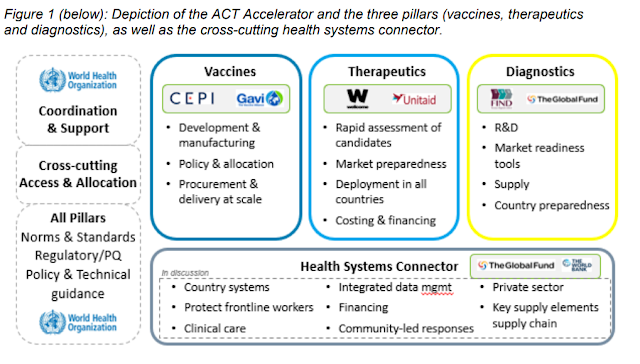
76 countries, including Japan, Germany and Norway, have now signed up to the COVAX scheme. The COVAX initiative aims to “accelerate the development and manufacture of COVID-19 vaccines, and to guarantee fair and equitable access for every country in the world”. That, again, sounds wonderful, especially given the staggering inequalities in vaccination levels between rich and developing countries.
But why is the World Health Organization (WHO), which is part of the UN, not calling the shots? “Countries together, through multilateral agencies like the WHO, were supposed to make decisions about global health issues, with maybe some technical support by others,” says Sulakshana Nandi from NGO People's Health Movement, which has recently brought out a Policy Brief on COVAX.
Big Pharma investment opportunities
COVAX was set up as a multi-stakeholder group by two other multi-stakeholder groups, GAVI (the Vaccine Alliance) and CEPI (the Coalition for Epidemic Preparedness Innovations), in partnership with the WHO. Both GAVI and CEPI have strong ties with the World Economic Forum (which was one of the founders of CEPI) as well as the Bill and Melinda Gates Foundation, and both are also connected to companies like Pfizer, GlaxoSmithKline, AstraZeneca and Johnson & Johnson through manufacturer partnerships (GAVI) or as 'supporters' (CEPI). Even though COVAX is funded predominantly by governments, it is these corporate-centered coalitions that are overseeing its roll-out.
The contrast between the multi-stakeholder approach and a 'classic' multilateral one came to the surface when South Africa and India proposed the so-called TRIPS waiver at the end of last year. They requested a temporary lifting of intellectual property rules on all COVID-19 technologies in order to boost the manufacturing and distribution of vaccines and other essential medical products in mainly developing countries. WHO director-general Tedros Adhanom Ghebreyesus said in a speech that he backed the proposal. “But GAVI, the Bill and Melinda Gates Foundation – even Bill Gates himself – and Big Pharma opposed this proposal very strongly,” said Nandi. “It's more important for them to protect their interests and market mechanisms than to protect universal health or protect people from COVID.” The WHO was approached for comment but has not replied.
Again, there is a stark choice between a human rights-led approach carried out by the UN and a profit-led approach carried out by multistakeholder bodies representing the interests of corporations. In the case of COVAX – which is failing to meet its modest aim of vaccinating 20% of the populations of low- and middle-income countries – the former has won out.
Something fishy really is going on in the realm of global governance. If you value your right to public health, to privacy, to access healthy food or to democratic representation, be wary of the words 'stakeholder capitalism’ when they pop up at the next Davos summit.
Big tech governing big tech
Another landmark in the development of stakeholder capitalism can be found in the Big Tech sector. As a part of his 2020 Roadmap for Digital Cooperation, the UN Secretary-General called for the formation of a new ‘strategic and empowered multi-stakeholder high-level body’. Again it's not easy to find a list of stakeholders but after some digging a long list of ‘roundtable participants’ for the roadmap includes Facebook, Google, Microsoft and the WEF.
Although the functions laid out for this new body are quite vague, civil society organizations fear it will come down to Big Tech creating a global body to govern itself. This risks institutionalizing these companies' resistance against effective regulation both globally and nationally and increasing their power over governments and multilateral organizations. If the body comes to fruition, it could be a decisive victory in the ongoing war GAFAM (Google, Apple, Facebook, Amazon, and Microsoft) is waging with governments over tax evasion, antitrust rules, and their ever-expanding power over society.
More than 170 civil society groups worldwide have signed another open letter to the secretary-general of the UN – this time to prevent the digital governance body from forming. The secretary-general was approached for comment but had not replied at the time of publication. Here is the full article.
Stakeholder Capitalism by McKinsey
The McKinsey Global Institute concluded that those with a long-term view—something that is essential to stakeholder capitalism—outperformed the rest in earnings, revenue, investment, and job growth. Other McKinsey research found that companies with strong environmental, social, and governance (ESG) norms recorded higher performance and credit ratings; other research has found that such companies perform better during crises.
Current data does not indicate that COVID-19 booster shots are needed, World Health Organisation (WHO) chief scientist Soumya Swaminathan said on August 18, 2021. Most importantly this was published by Reuters.
The World Health Organisation (WHO) has revealed that the current data does not indicate that COVID-19 booster shots are needed, however, it maintains that the most vulnerable people worldwide should be fully vaccinatedhttps://t.co/gZri8Z0NTO
Facebook's independent fact-checker might not be so independent after all. US Congressman's questioned the partiality, Fact Check dot org, which is supposed to tackle vaccine disinformation because it's indirectly funded by jab manufacturer Johnson & Johnson.
Who pays the paychecks of the fact-checkers? The vaccine fact-checkers at Fact Check dot org, who claim to be independent, are funded by an organization that holds over $1.8 billion of stock in a vaccine company and is run by a former director of the Center for Disease Control.
The fact-checking account responded to accusations by making clear its funding sources. The Robert Wood Johnson Foundation is one of those benefactors billions and owns billions in Johnson & Johnson stock. The foundation's CEO is Richard Besser who is a former acting Director for the Center for Disease Control. Yet Fact Check dot org claims there' no interference in its editorial decisions and the Foundation's views aren't necessarily reflected in its decisions. But author and liberal studies expert Michael Rectenwald believes such connections pose risks to the public.
This absolute collusion on the part of vaccine manufacturers having funded the fact-checkers on social media. So we're actually getting to the point where people's lives are being endangered. We've lost all confidence in social media and our mainstream media entirely. Anything that comes into contradiction with the Leftist's agenda is deemed misinformation. People are now not able to get information about what's best for their health. Including the detriments of the vaccine.
NOTHING TO SEE HERE...
Former director of CDC is now CEO of the foundation that funds FACTCHECK. org’s vaccine fact checking program. Roughly 15% of said foundation’s assets are J&J stock.
Bless your heart if you think factcheck .org is an unbiased source of vaccine information pic.twitter.com/Ijq3sojHmV
President Biden on Thursday called on state and local governments to use funds from his $1.9 trillion American Rescue Plan to offer $100 payments to individuals in order to incentivize coronavirus vaccinations.
The payments would be offered to newly vaccinated Americans to provide “an extra incentive to boost vaccination rates, protect communities, and save lives,” the Treasury Department said in an announcement Thursday afternoon.
“Treasury stands ready to give technical assistance to state and local governments so that they may use the funds effectively to support increased vaccination in their communities, and Treasury will partner with the Department of Health and Human Services throughout this effort,” it said.
Well, it's called exploitation. Prey on those that live week to week and desperately need $. This administration is pathetic, evil, and illegal.
How about instead of a one-time $100 payout to get the injection, why not .gov promise to pay for all related medical bills resulting from adverse reactions to the wu-Flu jab. That would equal somewhere around $100,000 minimum per person.... which might be a better incentive.
$100 isn’t enough
$1,000 isn’t enough
$1,000,000 isn’t enough.
Wait until you need to show proof of vaccination to renew your driver's license, register your car, renew your passport, get a marriage license, and even get your tax refund.
Everything that you need from the government, except to vote..that would be racist. That's why resisting now is so important.
This all reeks of fear and desperation.
Their narrative is coming undone. Too much information is leaking out of their tech-censored bubble.
Meanwhile Pfizer's COVID-19 vaccine generated $7.8 billion in revenue in the second quarter
And all those who already got the vaccine, before the incentive - you are . . . (to be continued)
Jumping the shark is an idiom used to describe the moment of a misguided attempt at generating new publicity for something once, but no longer, widely popular; the attempt serves instead to highlight the irrelevance of what it intends to promote.
c19vaxreactions.com is a large and ever-growing group of Americans who were previously healthy and have been seriously injured by the COVID vaccines (Pfizer, Moderna, J&J as well as Astra Zeneca in the clinical trial stage in the United States).
We are pro-vaccine, pro-science and were excited for the opportunity to be vaccinated and to do our part in helping to end the pandemic.
A group was formed to reach out to the medical community and government to acknowledge problems are happening.
Mom describes her daughter’s bad COVID vaccine reaction, says she’s now in a wheelchair. Mother Stephanie De Garay joins ‘Tucker Carlson Tonight to discuss how her 12-year-old daughter volunteered for the Pfizer vaccine trial and is now in a wheelchair.
Guillain-Barré occurs when the body’s own immune system attacks and injures the nerves outside of the spinal cord or brain – the peripheral nervous system. Most commonly, the injury involves the protective sheath, or myelin, that wraps nerves and is essential to nerve function.
Without the myelin sheath, signals that go through a nerve are slowed or lost, which causes the nerve to malfunction.
To diagnose Guillain-Barre Syndrome, neurologists perform a detailed neurological exam. Due to the nerve injury, patients often may have a loss of reflexes on examination. Doctors often need to perform a lumbar puncture, otherwise known as a spinal tap, to sample spinal fluid and look for signs of inflammation and abnormal antibodies.
Studies have shown that giving patients an infusion of antibodies derived from donated blood or plasma exchange – a process that cleans patients’ blood of harmful antibodies - can speed up recovery. A very small subset of patients may need these therapies long-term.
What is causign Guillain-Barré syndrome?
The FDA reports that 12.5 million doses of the Johnson & Johnson vaccine have been administered — about 8% of the population of fully vaccinated people in the United States. As of July 13, 2021 (the day the FDA issued its warning), 100 cases of Guillain-Barré had been reported in individuals who received that vaccine. Of those cases, 95 were considered serious and required hospitalization; one case resulted in death.
GBS symptoms usually develop within two days and start in the extremities
Symptoms of GBS typically develop within 42 days of vaccination, and the first symptom is often numbness or tingling in your hands or feet.
“The typical progression of GBS is from the legs up to the arms over a one-week to four-week period,” Dr. Levin says. “That can be accompanied by progressive heaviness and weakness in the legs the arms — and later on, there can be difficulty with swallowing and breathing, but those are unlikely to be initial presentations.”
Although the Johnson & Johnson shot is the only COVID-19 vaccine that has been linked to Guillain-Barré syndrome, it’s not the first time a vaccine has been linked to the disorder.
In rare cases, people have developed GBS after receiving the flu shot — about one case of GBS for every 1 million influenza vaccines administered. But why?
“There’s evidence that GBS is an autoimmune reaction in which the body produces antibodies directed toward myelin, the insulation of the nerves,” Dr. Levin explains. “Vaccines tend to rev up your immune system, which could rev up antibodies that recognize different tissues within your body as foreign — even though, of course, they are not foreign.”
It’s worth noting that, aside from the flu vaccine, there’s currently no conclusive association between GBS and other vaccines, though it hasn’t been ruled out, either.
During the phase III Pfizer-BioNTech and Moderna trials, seven cases of facial paralysis or Bell's palsy were reported in the vaccine groups (7 of 35,654), and one case was seen in the placebo groups (1 of 35,611). A causal relationship was not established, but the FDA recommended that vaccine recipients be monitored.
Following the documentation of a case of Bell's palsy associated with vaccination,1 we were contacted by patients and colleagues from Canada, Australia, Europe, the UK, and United Arab Emirates. Questions raised were whether mRNA vaccine recipients are at increased risk of developing Bell's palsy, and what to recommend to individuals with a history of Bell's palsy.
It is unclear whether the vaccine caused the outbreaks of Bell’s palsy, but Dr. Paul Offit, a member of the FDA’s Vaccines Advisory Committee who voted to approve the Pfizer preventative, said in an interview with CNBC that the condition should be monitored. “I’m not dismissing that yet,” he said.
Despite geographical and seasonal variations, generally agreed incidence of Bell's palsy is 15–30 cases each year per 100 000 population. Ozonoff and colleagues rightly state that the predicted 12-month (annual) incidence of Bell's palsy inferred from mRNA vaccine trials is higher than that reported during the 2-month observation period of these studies. They concluded that the observed incidence of Bell's palsy in the mRNA vaccine arms was 3·5 to seven times higher than expected in the general population. However, safety data were collected for participants with a median follow-up of 2 months after the second dose; therefore, the data refer to an overall observation period of approximately 12 weeks from dose one. Given this, and considering Bell's palsy as the possible outcome of individual doses, the observed incidence in the mRNA vaccine trials would be roughly 1·5 to three times higher than in the general population
The numerical imbalance reported with mRNA vaccine trials was not seen in the Oxford-AstraZeneca and Johnson & Johnson phase 3 studies using more traditional virus-based technology. Examination of adverse event data from the Yellow Card scheme in the UK and from the EU EudraVigilance database might help clarify this matter. As of March 21, the Yellow Card-reported frequency of facial paralysis or paresis and facial nerve disorder after any dose was close to 23 per million with the Pfizer-BioNTech vaccine and 13 per million with the Oxford-AstraZeneca vaccine. Excluding reports of facial paralysis cross-listed with a cerebrovascular accident, EudraVigilance data indicate a much higher frequency of facial paralysis after the Pfizer-BioNTech vaccine than after the Oxford-AstraZeneca vaccine (497 vs 56 cases or 13·6 vs 4·1 per million doses as of April 3). The risk of developing facial paralysis could be two to three times higher in individuals receiving mRNA vaccines than in those receiving traditional vaccines. These findings should be considered when selecting a vaccine for patients with a history of Bell's palsy.
People who have previously had GBS may receive a COVID-19 vaccine. To date, no cases of GBS have been reported following vaccination in participants in the mRNA COVID-19 vaccine clinical trials. One case of GBS was reported in a vaccinated participant in the Johnson & Johnson Janssen COVID-19 Vaccine clinical trial (compared to one GBS case among those who received placebo). With few exceptions, the independent Advisory Committee on Immunization Practices (ACIP) general best practice guidelines for immunization do not include a history of GBS as a precaution to vaccination with other vaccines.
People who have previously had Bell’s palsy may receive a COVID-19 vaccine. Cases of Bell’s palsy were reported following vaccination in participants in the COVID-19 vaccine clinical trials. However, the Food and Drug Administration (FDA) does not consider these to be more than the rate expected in the general population. They have not concluded these cases were caused by vaccination.
Our survey was approved and made it through production! VACCINATED MENSTRUATORS ASSEMBLE:https://t.co/YY1eolCnWi
(This is a project to explore whether the covid vaxes affect the periods - if you have menstruated before and got the vax, take 15 min to tell us your experiences!)
This research study is about your experiences with your period or other menstrual bleeding (such as "spotting") and associated symptoms after receiving at least one dose of a vaccine for COVID-19. Side effects are a common and even important element of the vaccine response, and bleeding patterns can be an important way to understand how our immune systems are activated.
Could the COVID-19 vaccines impact menstruation? Experts discuss
The experts hope that understanding this side effect will help people to be better prepared for heavier or earlier menstrual flow after their doses.
After Katharine Lee received her COVID-19 vaccine, she and a colleague chatted about their side effects. Because they worked in a medical school, they received their shots early and felt this might be a good opportunity to understand the experience.
While they expected injection site pain and to maybe spike a fever, they both noticed a symptom that they had not expected: their menstrual cycles changed. As Lee began talking with other people who menstruated, she heard that they also experienced periods that came earlier, felt heavier or just seemed abnormal.
“The menstrual cycle is a really flexible and dynamic process and it responds to a lot of different things in life like stress, physical or mental or immune changes,” Lee, the post-doctoral scholar in the public health sciences division at the Washington University School of Medicine in St. Louis, told TODAY. “The menstrual cycle is supposed to respond and adapt.”
Lee informally talked to colleagues and friends about their periods and some observed differences.
“A number of people said they noticed their cycles were just a little weird,” she explained. “But attributed it to maybe the vaccine or maybe it was perimenopause.”
She reached out to her grad school professor, Kathryn Clancy, head of the Clancy Lab at the University of Illinois, which focuses on women's health research. Lee mentioned the irregular cycles and Clancy was interested. Then she received her first dose.
“A little after a week after this first Moderna dose and I had never had a period that was so heavy — not even in my 20s when I was having a really heavy cycle,” Clancy said.
Clancy shared her experience on Twitter and people responded with their own stories. Lee and Clancy realized they needed to gather this information in a standardized way. So, they worked on a survey to do just that.
“A lot of people had noticed something but hadn't heard anything about (menstrual changes) being a side effect,” Lee said. “So many things could impact people's menstrual experiences. So, we just thought if this is a side effect of … this type of vaccine it would be good for people to be prepared.”
Both researchers note that they are pro-vaccine and they’re conducting the research to understand the full range of side effects.
“We need to do more work noticing when there are different effects for different people, really, so that we can do a better job of (preparing for) these side effects," Clancy explained. "If people know, for instance, this is going to make you bleed more they're going to have more pads with them.”
According to a CDC presentation, cases of myocarditis or pericarditis, which are inflammatory diseases involving the heart, have been reported in patients aged 16 to 24 as of May 31.
The CDC reported Thursday that after getting their second dose of Pfizer's or Moderna's Covid-19 vaccinations, there has been a higher-than-expected number of cases of heart inflammation in 16- to 24-year-olds, according to preliminary data from its vaccine safety monitor system.
As of May 31, the CDC had received reports of 275 cases in that age bracket, according to a presentation prepared for an FDA advisory panel meeting on Thursday. According to the CDC, scientists estimated between 10 and 102 cases of myocarditis or pericarditis, which occurs when the heart muscle or the membrane surrounding it becomes inflamed.
Dr. Tom Shimabukuro of the CDC's Immunization Safety Office said Thursday at a meeting of the FDA's Vaccines and Related Biological Products Advisory Committee to discuss safety issues surrounding the use of Covid-19 vaccines in children as young as 6 months old, "We clearly have an imbalance there."
Though rare, there have been a total of 475 reported cases of myocarditis or pericarditis in people age 30 and younger, according to the CDC. Most patients who were hospitalized, or 81% of them, had full recovery from their symptoms, the agency said. As of May 31, 15 people remain hospitalized, with three in intensive care.
The majority of cases appear to occur in men and the median time to the onset of symptoms is two to three days, according to the CDC.
Some of the reported cases may be something else other than myocarditis or pericarditis upon further investigation, Shimabukuro said.
During a panel discussion later Thursday, Dr. Cody Meissner, a member of the committee, said he was “worried” about the heart issue reported in young vaccine recipients. He questioned whether there will be scarring of the muscular tissue or arrhythmia as a result of the condition.
“I think that’s unlikely but we don’t know that,” said Meissner, also a professor of pediatrics at Tufts University School of Medicine. “So, before we start vaccinating millions of adolescents and children, it’s so important to find out what the consequences are.”
The CDC’s vaccine safety group said last month it was looking into heart inflammation conditions in a “relatively few” people who received Covid vaccinations.
The cases were predominantly in adolescents and young adults and usually occurred within four days after getting the shot, the CDC said at the time. The condition was seen more often in men and most cases appear to be mild, the agency said, though officials are following up with the patients.
The CDC is coordinating its investigation with the FDA, which last month authorized the Pfizer-BioNTech vaccine for adolescents ages 12 to 15.
“We still don’t know whether this is truly related to the vaccine,” Dr. Peter Marks, director of the FDA’s Center for Biologics Evaluation and Research, said during a virtual Q&A event on May 27. He added that the “handful” of cases reported have been “very mild, lasting a day or two” and usually happened after a second dose.
Health experts say finding rare side effects once a vaccine or drug is administered to the general population is common and if myocarditis turns out to be related to the Covid vaccine, the risk is negligible when compared with the risks of being infected with Covid-19.
The mRNA jab delivers a synthetic, inorganic molecule (medical device) that programs your cells to synthesize pathogens in the form of the spike protein that your immune system will constantly have to fight off for the rest of your life. Molecular Biologist & Immunologist, Professor Dolores Cahill explains. NCGI article elaborates. Fauci confirms. Others call it Information Therapy that hacks the software of life, according to Moderna's [Mode RNA] chief scientist. You essentially become a GMO. Dr. Sherri Tenpenny has mapped out eight mechanisms of how the Covid jab is going to kill people
The mRNA jab does not prevent you from contracting Covid19 or from transmitting it. Dr. Steve Hotze elaborates. Fauci confirms. The CDCgraph underscores that reality, proving vaccines are ineffective and vaccine passports are totally useless
The FDA did not approve Moderna or Pfizer mRNA gene therapeutics they dubbed "vaccines". It simply authorized them. Fauci confirms. 19 doctors warned the world of the dangers. AstraZeneca is being dropped by 24 countries. Johnson & Johnson is a Viral Vector(1) vaccine that was given Emergency Use Authorization on Feb. 27, 2021. Several States have halted its distribution due to formation of blood clots. The CDC confirms. It also confirms(2) the Pfizer & Moderna jabs are the deadliest of all "vaccines"
The FDA & CDC have not revealed to the public over 20 adverse effects, including Death, related to Covid19 vaccines, which were discussed in an October 2020 meeting. 3,186 deaths from Covid19 vaccines are reported by the National Vaccine Information Center as at 4/16/2021, and one-third of the deaths occurred within 48 hours. For clarification purposes in this article, Covid19 is regarded as an influenza variant. Some will argue that it was developed in a Gain-of-Function lab. That is moot. The primary consideration is whether an experimental vaccine is warranted for a disease with a 99.9% survival rate. I am for tried, true and tested (safe) vaccines. I am NOT for experimental vaccines backed by disastrous animal studies.
Injuries and deaths by mRNA jabs keep rising. VAERS reports 10,152 serious injuries as at 4/16/21. In the first quarter of 2021 there has been a 6000% increase in vaccine deaths from the same period a year ago.
Normally the immune system attacks any germs that get into the body. But in people with Guillain-Barré syndrome, something goes wrong and it mistakenly attacks the nerves.
This damages the nerves and stops signals from the brain traveling along with them properly, which can cause problems such as numbness, weakness and pain in the limbs.
It's not clear exactly why this happens. The condition is not passed from person to person and is not inherited.
But research has since found the chances of developing the condition after having a vaccination are extremely small.
For example, a study into the vaccine used during the 2009 swine flu outbreak found that for every million people who had the vaccination, there were fewer than 2 extra cases of Guillain-Barré syndrome.
And evidence suggests that you are far more likely to get Guillain-Barré syndrome from an infection, such as the flu, than the vaccine designed to prevent the infection, such as the flu jab.
Guillain-Barré syndrome (GBS) is a rare disorder where the body’s immune system damages nerve cells, causing muscle weakness and sometimes paralysis. While its cause is not fully understood, the syndrome often follows infection with a virus or bacteria. Each year in the United States, an estimated 3,000 to 6,000 people develop GBS. Most people fully recover from GBS, but some have permanent nerve damage.
In 1976, there was a small increased risk of GBS after swine flu vaccination, which was a special flu vaccine for a potential pandemic strain of flu virus. The National Academy of Medicine, formerly known as the Institute of Medicine, conducted a scientific review of this issue in 2003 and found that people who received the 1976 swine flu vaccine had an increased risk for developing GBS. The increased risk was approximately one additional case of GBS for every 100,000 people who got the swine flu vaccine. Scientists have several theories about the cause, but the exact reason for this link remains unknown.
There have been several studies of the risk of GBS after flu vaccine and CDC monitors for GBS during each flu season. The data on an association between seasonal influenza vaccine and GBS have been variable from season to season. When there has been an increased risk, it has consistently been in the range of 1-2 additional GBS cases per million flu vaccine doses administered.
Studies suggest that it is more likely that a person will get GBS after getting the flu than after vaccination. It is important to keep in mind that severe illness and death are associated with flu, and getting vaccinated is the best way to prevent flu infection and its complications.