Showing posts with label Medicaid. Show all posts

50k+ Medicare Patients Died Soon After Getting COVID Shot

Whistleblower

‘They are lying. There is no question they are lying,’ said Attorney Renz. ‘The mantra of ‘safe and effective' must stop after today’s information.’

A whistleblower has provided government data documenting 48,465 deaths within 14 days of COVID-19 vaccination among Medicare patients alone, according to medical freedom rights attorney Thomas Renz.

The announcement Saturday was made by the Ohio-based attorney, who remains involved in several major cases brought against federal agencies relating to fraud and violations of medical freedom rights.

In his presentation, Renz expressed his appreciation for whistleblowers who were coming forward to provide the public with such important information from the Centers for Medicare & Medicaid Service (CMS). He described the CMS database as the largest available in the U.S. for the study of COVID-19 trends because it contains the data of approximately 59.4 million Medicare beneficiaries.

One slide showed that the number of “persons who died within 14 days of a COVID-19 vaccine” equated to 19,400 for those younger than 81 years old, and 28,065 for those 81 and over, totaling 48,465 deaths.

“This is raw data,” Renz explained. “There’s no analysis.” And, he emphasized, these death numbers are from less than 20% of the U.S. population.

“Do you want to know why 14 days is important?” he asked. “Because if you die with 14 days, you’re not considered vaccinated.” According to the Centers for Disease Control and Prevention (CDC), one is not considered as being “vaccinated” until 14 days after their completed injection regimen, raising the question of whether government authorities have been classifying these fatalities as something other than vaccination-related deaths.

Renz provided screenshots of the “raw data from the Medicare servers,” calling it “a present for the scumbag ‘fact-checkers’ who keep lying.”

“And what I want to know, are you going to fact check the HHS now?” he taunted. “Are you going to fact-check Fauci?”

In July, a whistleblower who works professionally as a computer programmer in health care data analytics, made a declaration under penalty of perjury that CMS data revealed “at least 45,000” vaccine-related deaths due to experimental COVID-19 vaccine injections. USA Today and others “fact-checked” the claim and called it misinformation.

A press release on Renz’s website responds, “Today’s revelations solidify that the ’Trusted News Initiative’ is actually the source of misinformation and propaganda, and that [the] Attorney Thomas Renz Whistleblower was correct all along.”

Since the roll-out of the COVID-19 gene-based vaccines began last December, with adverse reactions, including death, being passively reported on the CDC’s Vaccine Adverse Events Reporting System (VAERS), many have believed the actual numbers of injuries to be much higher.

The most recent data from the CDC’s VAERS system released last Friday reveals reports of 726,965 adverse events in the U.S. following vaccination, including 15,386 reports of deaths and 99,410 reports of serious injuries, between December 14, 2020, and September 17.

Yet the presumption of significantly higher real numbers is supported by a 2010 Harvard Pilgrim study which found that “fewer than 1% of vaccine injuries” are reported on VAERS. In addition, even vaccine manufacturers have calculated at least a “fifty-fold underreporting of adverse events” on this system.

Further, a recent whistleblower report from Project Veritas reveals medical personnel in federal hospitals confirming the presence of many patients suffering from COVID vaccine injuries, yet “nobody” reports them to VAERS.

Renz also provided evidence affirming that the Food and Drug Administration (FDA) has been using this same CMS data to monitor different types of adverse reactions to the injections in “near real time,” even while these government agencies and the media continue to repeat that this gene-based vaccine is “safe and effective.”

Displaying data of Medicare beneficiaries in the State of New York alone revealed thousands of cardiovascular events, cases of COVID-19, and deaths among a total of 16 tracked adverse events.

“Remember, these are ‘side effects’ that the government, media, and social media continue to tell the public that are not happening,” he said. “They are lying. There is no question they are lying.”

“The mantra of ‘safe and effective’ must stop after today’s information,” Renz said.

Almost 50% of Hospitalized with COVID-19 Had Mild or Asymptomatic Cases

div class="separator" style="clear: both; text-align: center;">average cost per day in the hosptial

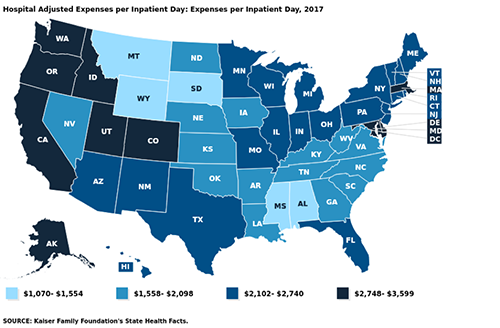
US hospitals typically spend $2,424/day to provide inpatient care.  Are hospitalizations another federal money grab? 

hosptial costs by insurance type
Hospital Stay Costs by Insurance Type

A new study suggests that almost half of those hospitalized with COVID-19 have mild or asymptomatic cases.

Researchers from Harvard Medical School, Tufts Medical Center, and the Veterans Affairs Healthcare System took on the task of trying to figure out how serious Covid cases were in those hospitalized, and how many people counted as Covid hospitalizations were actually in the hospital for Covid, versus getting a Covid test after being admitted for something else. 

The study "analyzed the electronic records for nearly 50,000 COVID hospital admissions at the more than 100 VA hospitals across the country," The Atlantic wrote. It "checked to see whether each patient required supplemental oxygen or had a blood oxygen level below 94 percent" in order to try and determine if cases met the NIH's threshold for "severe COVID". 

What the study found was that from March 2020 to January 2021, 36% of Covid cases in the hospital were mild or asymptomatic. From January 2021 to June 2021, during the Delta variant's spread, that number rose all the way to 48%. For vaccinated hospital patients, the number rose to a stunning 57%. 

At least 12,000 Americans have already died from COVID-19 this month, as the country inches through its latest surge in cases. But another worrying statistic is often cited to depict the dangers of this moment: The number of patients hospitalized with COVID-19 in the United States right now is as high as it has been since the beginning of February. It’s even worse in certain places: Some states, including Arkansas and Oregon, recently saw their COVID hospitalizations rise to higher levels than at any prior stage of the pandemic. But how much do those latter figures really tell us?

From the start, COVID hospitalizations have served as a vital metric for tracking the risks posed by the disease. Last winter, this magazine described it as “the most reliable pandemic number,” while Vox quoted the cardiologist Eric Topol as saying that it’s “the best indicator of where we are.” On the one hand, death counts offer finality, but they’re a lagging signal and don’t account for people who suffered from significant illness but survived. Case counts, on the other hand, depending on which and how many people happen to get tested. Presumably, hospitalization numbers provide a more stable and reliable gauge of the pandemic’s true toll, in terms of severe disease. But a new, nationwide study of hospitalization records, released as a preprint today (and not yet formally peer-reviewed), suggests that the meaning of this gauge can easily be misinterpreted—and that it has been shifting over time.

If you want to make sense of the number of COVID hospitalizations at any given time, you need to know how sick each patient actually is. Until now, that’s been almost impossible to suss out. The federal government requires hospitals to report every patient who tests positive for COVID, yet the overall tallies of COVID hospitalizations, made available on various state and federal dashboards and widely reported on by the media, do not differentiate based on the severity of illness. Some patients need extensive medical intervention, such as getting intubated. Others require supplemental oxygen or administration of the steroid dexamethasone. But there are many COVID patients in the hospital with fairly mild symptoms, too, who have been admitted for further observation on account of their comorbidities, or because they reported feeling short of breath. Another portion of the patients in this tally are in the hospital for something unrelated to COVID, and discovered that they were infected only because they were tested upon admission. How many patients fall into each category has been a topic of much speculation. In August, researchers from Harvard Medical School, Tufts Medical Center, and the Veterans Affairs Healthcare System decided to find out.

Researchers have tried to get at similar questions before. For two separate studies published in May, doctors in California read through several hundred charts of pediatric patients, one by one, to figure out why, exactly, each COVID-positive child had been admitted to the hospital. Did they need treatment for COVID, or was there some other reason for admission, like cancer treatment or a psychiatric episode, and the COVID diagnosis was merely incidental? According to the researchers, 40 to 45 percent of the hospitalizations that they examined were for patients in the latter group.

The authors of the paper out this week took a different tack to answer a similar question, this time for adults. Instead of meticulously looking at why a few hundred patients were admitted to a pair of hospitals, they analyzed the electronic records for nearly 50,000 COVID hospital admissions at the more than 100 VA hospitals across the country. Then they checked to see whether each patient required supplemental oxygen or had a blood oxygen level below 94 percent. (The latter criterion is based on the National Institutes of Health definition of “severe COVID.”) If either of these conditions was met, the authors classified that patient as having moderate to severe disease; otherwise, the case was considered mild or asymptomatic.

The study found that from March 2020 through early January 2021—before vaccination was widespread, and before the Delta variant had arrived—the proportion of patients with mild or asymptomatic disease was 36 percent. From mid-January through the end of June 2021, however, that number rose to 48 percent. In other words, the study suggests that roughly half of all the hospitalized patients showing up on COVID-data dashboards in 2021 may have been admitted for another reason entirely, or had only a mild presentation of the disease.

This increase was even bigger for vaccinated hospital patients, of whom 57 percent had mild or asymptomatic disease. But unvaccinated patients have also been showing up with less severe symptoms, on average, than earlier in the pandemic: The study found that 45 percent of their cases were mild or asymptomatic since January 21. According to Shira Doron, an infectious-disease physician and hospital epidemiologist at Tufts Medical Center, in Boston, and one of the study’s co-authors, the latter finding may be explained by the fact that unvaccinated patients in the vaccine era tend to be a younger cohort who are less vulnerable to COVID and may be more likely to have been infected in the past.

Among the limitations of the study is that patients in the VA system are not representative of the U.S. population as a whole, as they include few women and no children. (Still, the new findings echo those from the two pediatric-admissions studies.) Also, like many medical centers, the VA has the policy to test every inpatient for COVID, but this is not a universal practice. Lastly, most of the data—even from the patients admitted in 2021—derived from the phase of the pandemic before Delta became widespread, and it’s possible that the ratios have changed in recent months. The study did run through June 30, however, when the Delta wave was about to break, and it did not find that the proportion of patients with moderate to severe respiratory distress was trending upward at the end of the observation period.

The idea behind the study and what it investigates is important, says Graham Snyder, the medical director of infection prevention and hospital epidemiology at the University of Pittsburgh Medical Center, though he told me that it would benefit from a little more detail and nuance beyond oxygenation status. But Daniel Griffin, an infectious disease specialist at Columbia University, told me that using other metrics for the severity of illness, such as intensive-care admissions, presents different limitations. For one thing, different hospitals use different criteria for admitting patients to the ICU.

One of the important implications of the study, these experts say, is that the introduction of vaccines strongly correlates with a greater share of COVID hospital patients having mild or asymptomatic disease. “It’s underreported how well the vaccine makes your life better, how much less sick you are likely to be, and less sick even if hospitalized,” Snyder said. “That’s the gem in this study.”

“People ask me, ‘Why am I getting vaccinated if I just end up in the hospital anyway?’” Griffin said. “But I say, ‘You’ll end up leaving the hospital.’” He explained that some COVID patients are in for “soft” hospitalizations, where they need only minimal treatment and leave relatively quickly; others may be on the antiviral drug remdesivir for five days, or with a tube down their throat. One of the values of this study, he said, is that it helps the public understand this distinction—and the fact that not all COVID hospitalizations are the same.

But the study also demonstrates that hospitalization rates for COVID, as cited by journalists and policymakers, can be misleading, if not considered carefully. Clearly many patients right now are seriously ill. We also know that overcrowding of hospitals by COVID patients with even mild illness can have negative implications for patients in need of other care. At the same time, this study suggests that COVID hospitalization tallies can’t be taken as a simple measure of the prevalence of severe or even moderate disease, because they might inflate the true numbers by a factor of two. “As we look to shift from cases to hospitalizations as a metric to drive policy and assess the level of risk to a community or state or country,” Doron told me, referring to decisions about school closures, business restrictions, mask requirements, and so on, “we should refine the definition of hospitalization. Those patients who are there with rather than from COVID don’t belong in the metric.”

Among the limitations of the study is that patients in the VA system are not representative of the U.S. population as a whole, as they include few women and no children. (Still, the new findings echo those from the two pediatric-admissions studies.) Also, like many medical centers, the VA has a policy to test every inpatient for COVID, but this is not a universal practice. Lastly, most of the data—even from the patients admitted in 2021—derive from the phase of the pandemic before Delta became widespread, and it’s possible that the ratios have changed in recent months. The study did run through June 30, however, when the Delta wave was about to break, and it did not find that the proportion of patients with moderate to severe respiratory distress was trending upward at the end of the observation period.

Read the article

Beware of COVID-19 Laboratory Testing Scams

beware of COVID-19 scams

Coronavirus Fraud Takes Many Forms as Federal and Local Officials Continue to Pursue Widespread Cases of Clinical Laboratory Testing Scams

Federal investigators have been actively searching for trends of fraud in Medicare claims data for COVID-19 clinical laboratory research since the pandemic started.

According to media studies, dating back to at least March, fraudulent actors offering fake SARS-CoV-2 tests have preyed on vulnerable Americans in a wide range of ways during the public health emergency. In return for swab collections and fake testing, the New York Times reported, some scam operators have gone into nursing homes and long-term care facilities to raise money from unsuspected elders.

The federal Centers for Medicare and Medicaid Programs (CMS) no longer needs a laboratory test requirement signed by a treating physician or other provider for COVID-19 testing after the declaration of the public health emergency in the US. "The high demand for and restricted availability of SARS-CoV-2 samples, along with the decision by CMS to loosen rules during the pandemic for some test orders, makes the situation a potentially ripe one for fraud," said Modern Healthcare.

Moreover, a lack of clarification about the medical necessity of COVID-19 tests might increase the risk of liability for clinical laboratories that are law-abiding. All of these variables make COVID-19 fraud testing a possible bombshell for clinical laboratories performing coronavirus testing that could get caught up in federal research.

Feds Increasing Enforcement

The FBI, the Better Business Bureau (BBB), the FDA, the Federal Department of Health and Human Services ( HHS), and other federal and local authorities have repeatedly alerted physicians, hospitals, and healthcare customers about the potential for fraud by unscrupulous firms pretending to deliver COVID-19 legitimate clinical laboratory tests shortly after the pandemic arrived in the US. "Scammers are selling fraudulent and/or unapproved COVID-19 antibody tests, potentially providing false results," a June 26 FBI press release said.

Some of the fraudsters behind these scams have operated online and through social media and email. While others have conducted these scams in person or over the phone, noted the press release. And yet, the scams and news stories about them have continued to propagate during the COVID-19 pandemic, despite the warnings.

How Do The Fraudsters Work?

Fraudsters aim to collect personal information from customers in many of these scams, including names, birth dates, and social security numbers, as well as other types of personal health information, such as data from Medicare or private health insurance, the FBI said. Scammers can use the data in fraud schemes for medical insurance or to commit identity theft, the agency said.

In addition, any fraudulent or incorrect COVID-19 tests or assays not approved to be used by the FDA may give false results to physicians, potentially creating a dangerous situation for patients. 

The New York Times (NYT) recently announced that a notice "about scammers selling fake COVID-19 antibody tests as a way to access personal information that can be used for identity theft or medical insurance fraud" was released by the FBI.

The BBB added an alert to its website three days after the FBI released its warning about the COVID-19 antibody testing scam:' BBB Scam Alert: Want a COVID-19 test? "There is a scam for that." BBB also provided customers with advice about how to stop scam checking. 

The FDA announced on June 17 that it had given warning letters to three firms for the sale of adulterated and misbranded COVID-19 antibody tests, an FDA news release said. Warning letters have been sent by the department to:


The New York Times reported on April 17 that a special agent with the HHS OIG noted that impostors requesting information from Medicare or Medicaid posed as physicians or laboratory technicians in nursing homes and assisted living facilities to deliver fake tests.

The Texas Tribune reported earlier in April that the owner of a freestanding emergency room in Laredo, Texas, spent $500,000 on buying 20,000 COVID-19 rapid tests for patients suspected of having COVID-19. In Laredo, health officials decided to set up a drive-through testing site and then conduct tests to detect active infections from a manufacturer in China. City health officials learned they were ineffective and unusable after attempting to verify the samples.

An April 9 article from the AARP (American Association of Retired Persons) news department reported that in several states, including Alabama, Arizona, Florida, Georgia, Kentucky, New York, and Washington state, federal officials have found fake coronavirus testing sites. 

According to AARP, the FBI investigated several fake test sites in Louisville, Ky., after a city official confirmed the collection of biological specimens from residents by individuals in personal protective equipment ( PPE). In order to prove their identity, those requesting tests were advised to pay $240 in cash or have their Medicare, Medicaid, or Social Security cards.

The AARP confirmed that fake drive-up testing sites were confirmed over a four-day period at gas stations and other locations in Louisville. 

On April 2, WRGB TV in Albany, N.Y., announced that in return for bogus coronavirus tests, scammers claiming to be from the New York State Department of Health (NYSDOH) were taking money and insurance details from individuals. One woman told police that she had a fake test in a Little League parking lot at a drive-up spot.

North Greenbush police said the scammers described themselves as being with NYSDOH and obtained information from several individuals about money and insurance. Police and state officials said that in the parking lot, the DOH had no connection to the collection site.

Lessons for Laboratories

The message from these stories is to be vigilant of strangers providing COVID-19 testing for clinical laboratory directors and all clinical laboratory scientists, while also making sure to post information on the legitimacy of your laboratory's rapid molecular and serological tests to customers. Doing so could entail presenting evidence that the FDA has approved the coronavirus to be used for your studies.

Medical laboratories should also ensure that proper identification is demonstrated by all workers collecting specimens in public places.

How Much Does A Covid-19 Test Cost?


COVID-19 test prices vary from institution to institution, with some establishments charging as little as $20 for a diagnostic test, while others charge up to $850. Here's everything we know about the cost, as well as some examples of people paying thousands of dollars out of pocket. We have examined the COVID19 test price to see how much the price varies and how much the cost difference is between the different facilities. Twelve hospitals have tests listed at a discounted price, ranging from $36 to $180 per test.
   
An insurance agent told ProPublica that the cost of a COVID-19 test in Texas can range from less than $100 to thousands of dollars. A number of private providers, including those who have insurance, charge significantly more, and some significantly higher, fees for COVID-19 tests.

Insurance companies in Texas typically pay between $100 and $300 for a ride - up to the COVID 19 test. In general, health plans will pay for 19 tests ranging from $1,000 to $2,500.  Many insurance providers will take the COVID 19 antibody test, but you should check the details with your insurance plan. Whether or not the cost of the test is free depends on whether there is insurance that covers the three-step process and how much of it is covered 100% or in part.
   
If you have a short-term medical plan or are a member of a Department of Health, the test can be a covered service. If you are uninsured, inform your healthcare provider that he or she has the right to pay the associated costs to the provider or laboratory. You can pay for the COVID-19 antibody test and its costs all over the map. 
   
You will want to contact your insurance company, Medicare, or Medicaid provider before you visit. Many insurers also undertake to cover the cost of a COVID-19 test if it is carried out in an institution outside the network. Your doctor will charge you for the COVID-19 exam at the time of your visit, regardless of whether you are insured or not.
   
The cost of a COVID 19 test may vary depending on the location of the laboratory where the test is performed. If the cost of testing at your nearest testing center is high, check the cost of other testing facilities in your region to determine the most cost-effective test site. The cost of a COVID-19 test may vary by location, but it may also vary by type of test facilities, such as Mount Sinai's partnership with the University of California, Los Angeles (UCSF), or California Institute of Technology (Caltech).  The cost of a COVID-19 test may vary depending on the place of residence, type of test facility, and location of the test center.
   
CARES law does not prohibit out-of-network providers from charging patients directly for a COVID-19 test, but Levitt also warns that patients who receive a test that is false negative and the test results are positive may still be left out of pocket. If this happens, the cost of the advance check-up could discourage patients from getting the tests when they are not affordable. Cost-sharing, which saves you the need for tests and alternative diagnoses, applies when you order COVID-19 tests. Patients cannot forget the tests for coronavirus and all visits related to the tests are covered by the costs of the network clinic or facility.
   
Without a copy, many patients never know how much their tests actually cost their insurers, which could lead to overcrowding. This is a potential cost trap if you get tested for people who are uninsured or who are infected with COVID-19.
   
Some people think that if you get tested, even if you're not in the insurance network, you can still get treatment just to get the test. This means that even though your visit did not result in a COVID-19 test and you had a test even though you were not in the network of insurance policies because you had just received a coronavirus test, you could still receive a bill. Some health insurance companies only take the tests if they are considered medically necessary, which usually means that the doctor has recommended them.
   
To remove the financial hurdle for evaluation, insurers could waive costs - and doctors who submit a COVID-19 diagnostic code to order a COVID-19 test could share the costs. If a patient calls the COVID-18 hotline and is directed to a drive-by test site, the patient is not liable for the cost-share, as the cost of the COVID-19 tests is fully covered

80% of Health Outcomes Are NOT Due To Medical Factors

The future of healthcare is really going to be driven by our ability to interpret social needs data. Having a guide and more data, so we can understand the patients’ lives beyond the four walls of the hospital.   A patient’s socioeconomic circumstances are the social determinants of health (SDOH).  Where you live also plays a big role in your health outcome and we call this physical environment of health (PEOH).

Eighty percent of what affects health outcomes is associated with factors outside the traditional boundaries of healthcare delivery—health behaviors (tobacco use, sexual activity), social and economic factors (employment, education, income), and physical environment (air quality, water quality). When healthcare delivery systems expand their interactions with people in these territories, now the purview of the public health system, outcomes will improve.

Social & physical determinants of health look at the following factors:

The U.S. spends more on healthcare, yet has a lower life expectancy and worse health outcomes, than any other high-income nation according to study from the Commonwealth Fund.   Why the disparity? Other countries have been doing something the U.S. has not—applying public health concepts to chronic disease management.

The economic models of countries such as France, Germany, and Norway align with controlling costs while producing better outcomes. As an illustration, private healthcare spending in the U.S. is five times that of the second-highest spending country (Canada). And despite this astronomical private spend, the U.S. is also third-highest in public spending, despite only covering 34 percent of residents through public programs including Medicare and Medicaid.


Did you know that the USA and New Zealand are also the only Countries that allow big pharma drug advertising on television?  Most of my friends who grew up in England or Australia think the US is nuts for allowing this.

Approximately 3.6 million Americans struggle to access healthcare because they don’t have reliable transportation.

As many as 1 in 8 Americans are food insecure or dependent on a local food bank or meal delivery service, to address gaps in nutrition for better health outcomes.

78% of providers lack the data to identify patients' social needs

Many providers have basic demographic information on their patient populations but are missing the more sophisticated insights that could help them better support patients to prioritize health. So, what should you be looking for?

Here is a service provided by Experian that will give Doctors access to some social data.


Top 10 Coronavirus Scams

Be on the lookout for and be wary of potential COVID-19 scams and abuses. Any information, complaints, or concerns can be reported to a public regulatory agency.  Its hard to determine which one but here are few FTC, FBI, Dept of Justice, US Attorney's Office, Homeland Security.  Not sure how all of these agencies or coalitions work together but someone they get the bad guys.  

Top 10 most common scams and frauds include: 
  • Economic Impact Payment (Stimulus Check):  Scammers pretend to be government officials offering false economic impact payments (stimulus checks) in order to obtain personal identifying information including social security and bank account numbers.
  • Treatment/Cure Scams: Scammers offer fake or unproven treatment regimens that are particularly dangerous because they have the potential to do more harm than good.
  • Charity Scams: Virtually every time there is a disaster or emergency, scammers set up fake charities to solicit donations that they then spend on themselves.
  • Overinflated prices: The Coalition will use every tool available to hold sellers accountable who unlawfully use the COVID-19 pandemic to unreasonably inflate prices.
  • Investment Scams: Scammers make false claims about tests, cures and other matters related to COVID-19 in order to entice victims to make investment decisions based on those false claims that allow the scammer to steal money and assets from Delawareans.
  • Email Scams: Scammers send victims emails related to COVID-19 that appear to be from the victims’ banks, health care providers, the World Health Organization, the Centers for Disease Control and Prevention (CDC), and others for the purpose of obtaining the victims’ personal identifying information and exploiting it for the scammers’ own benefit.
  • App Scams: Scammers are creating and manipulating mobile apps designed to track the spread of COVID-19 to insert malware that will compromise users’ devices and personal information.
  • Insurance, Workers’ Compensation and Medicaid Fraud: Businesses and government agencies are not immune to scams. They should also be vigilant to ensure scammers do not take advantage of their businesses or customers during this pandemic.
  • Scams specifically targeted at seniors: Seniors are more vulnerable than ever to common scams like the Grandparent Scam and Government Imposter Scams.  Consumers receiving a call or any contact claiming that loved ones are in danger or hurt, that they owe money and failure to pay will result in their arrest or other harm, or that their benefits are in jeopardy, do not act. Contact your loved ones or the purported agency using known, trusted contact information not sourced from the suspicious communication.

Popular Posts (All Time)

Topics

5G Activist ADE Advertising Air Quality Airlines Alchohol Alex Berenson Allergic Angry Moms Antibody Antitrust Apple Apps Arizona Aspirin Astra Zeneca Australia Bankruptcy Banks Banned Bars BBB Beaches Bell's Palsy Ben Shapiro Biden Big Pharma Big Tech Bill Gates BioNTech BitChute Black Rock Blackmail Blood Clots Booster Brave Brownstone Institute Bryan Ardis Business California Canada Cancer Candace Owens Cares Act CDC Censorship Chart ChatGPT Chicago Children China Class Action Clinical Trials Closures CNN Comirnaty Conspiracy Contact Tracing Corruption Cough COVAX Cover Up Crimes Against Humanity Cult Cuomo Dan Bongino DARPA Data David Martin Deaths DeSantis Diabetes Died Suddenly Disinformation Doctor Reiner Doctors DOJ Dominion Dr Michael Yeadon Dr Reiner Dr Shiva Dr Zelenko Drugs Durability DWAC ECDC Education Election Elon Musk Email Enforcement Europe Exemptions Extortion Facebook Fact Checkers Fake Laws Fake News Fake Tests Fake Vaccine False Positive Famotidine Fauci FBI FDA Fear Mongering Federal Reserve Feds Fines Florida Flu Flu Shots Fluvoxamine Fox France Fraud Free Speech Freedom FTC Gain of Function Research Gavin Newsom Genome George Soros Germany Glenn Beck Globalism Google Government Guillain-Barré Halloween Harvard Health Health Department Healthcare Heart Herd Immunity Hero HHS Hospitals How To Humor Hydroxychloroquine Hypocrisy Immune System India Inflamation Injured Insurance Investment IRS Israel Italy Ivermectin J&J Japan Jeff Bezos Jim Jordan Jobs Joe Rogan Judy Mikovits LA County Larry Elder Lawsuits Leadership Let Them Breathe Lies Loans Local Laws Lockdown Long Covid Los Angeles Mandates Map Masks Mass Hypnosis Media Medicaid Melatonin Mental Health Michigan Microsoft Minnesota Moderna Money Montana mRNA Mutation Myocarditis Nanoscience Nashville Natural Immunity NBA New Jersey New Media New York Nextstrain NFL NIH Nursing Homes NY NY Post Ohio Omicron Omricon Opinion Opposing View Oppression Outdoors Parks Passport Patents PCR Pennsylvania Pericarditis Peter McCullough Pfizer Phishing Physicians Declaration Placebo Plandemic Pneumonia Police Politics Poll Pollution PPP Prevention Pro Choice Project Veritas Protest Racism Rand Paul Real Estate Refuse Regeneron Relief Checks Remdesirvir Restaurants Restraining Order Robert Kennedy Robert Malone Ron Johnson Rudy Giuliani Rumble Russia Safegraph SBA Scams Schools Science Scott Gottlieb Senate Seniors Side Effects Sinus Social Distancing South Korea Spain Sports Stadiums Stakeholder Capitalism Stay at Home Sterilization Steve Kirsch Study Substance Abuse Surveillance Sweden Swine Flu Symptoms T Cells Taxes Teachers Technology Teslaphoresis Testing Texas Tips Tom Cotton Tony Bobulinski Transmission Tribunals Trojan Horse Trump TruthSocial Tucker Carlson Twitter Tyranny UK Unemployment United Nations Unity Project Vaccine VAERS Video Vietnam Vitamin D War Warren Buffett Washington WEF Whistleblower WHO Wisconsin Women Workers Comp Wuhan Zinc